French doesn’t take forever, but it doesn’t happen by magic either. You can pick up basic French surprisingly fast, often in a few weeks if your goal is greetings, food, directions, and simple travel phrases.
Real conversational ability takes longer. For most English speakers, a few months is enough for the basics, whilst solid day-to-day confidence usually takes 6 to 24 months, depending on how much you study and how often you actually use it.
That sounds like a wide range, because it is. If you want to learn French faster, the trick is to keep it practical, regular, and tied to real life.
How long it usually takes to learn French
French is often one of the easier languages for English speakers to pick up. A lot of vocabulary looks familiar, and the grammar, whilst not simple, isn’t as far from English as some other languages. Still, “easier” does not mean fast with no effort.
These rough ranges give you a realistic starting point.
| Level | What it usually feels like | Study hours | Common timeline |
|---|---|---|---|
| A1 | Simple words, short phrases, basic exchanges | 60 to 100 | About 2 to 3 months |
| B1 | Short conversations on familiar topics | 350 to 400 | About 8 to 12 months |
| B2 | Solid independent conversation and better listening | 600 to 750 | About 1 to 2 years |
Those estimates line up with Alliance Francaise’s guide to French study time. They also show why daily study time matters so much. Thirty minutes a day can stretch the journey to B2 across several years. One or two hours a day can cut that down a lot.
Useful French arrives sooner than fluent French.
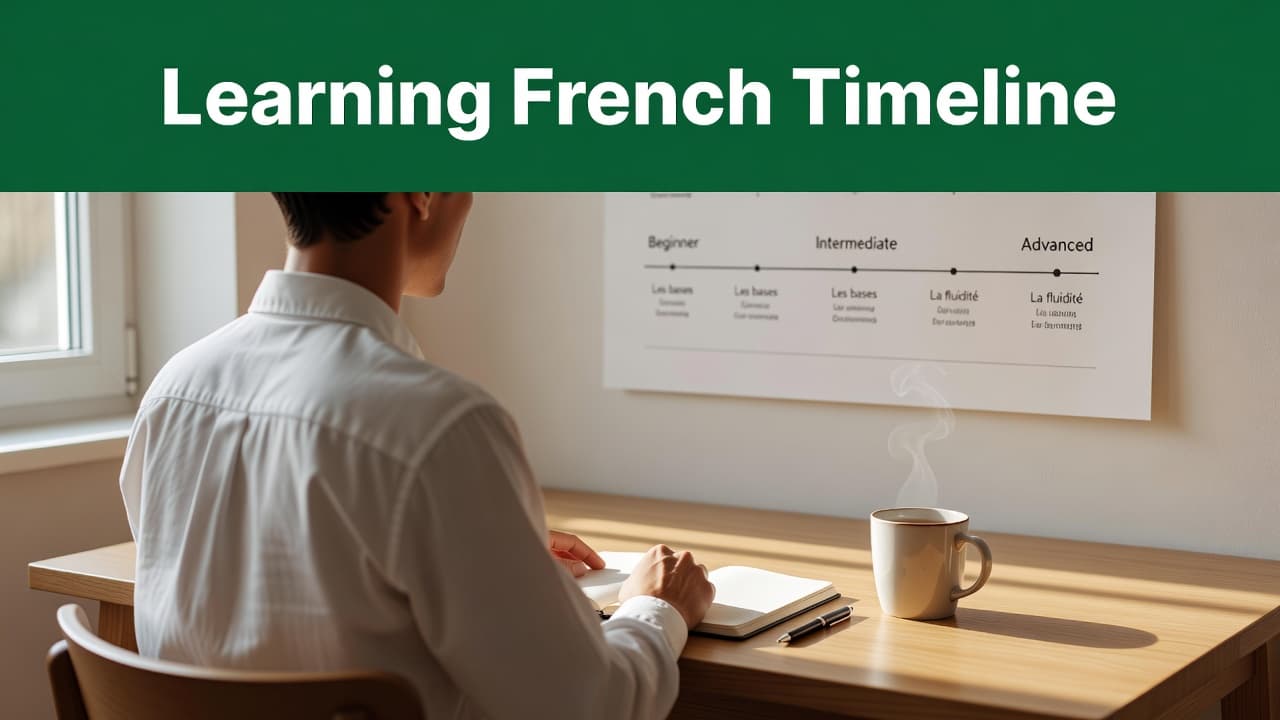
What basic French looks like in the first few months
In the first two or three months, most beginners can learn enough French to get through simple situations. That means greetings, introductions, numbers, time, asking for directions, ordering food, paying for things, and saying what you want or need.
You can also build a small core of present-tense sentences. Things like where you live, what you do, what you like, and where you are going. At this stage, the goal is not to sound polished. The goal is to understand enough and be understood.
When French starts to feel conversational
French starts to feel conversational when you stop translating every single word in your head. You can follow slower speech on familiar topics, ask follow-up questions, and give short answers without freezing.
That usually comes after several months of steady work, not grammar study alone. Listening and speaking make the big difference here.
Many timelines, including Preply’s 2026 guide on learning French, put this more comfortable stage in the high hundreds of study hours, which is why patience matters.
What steady progress looks like over a year or more
After a year of regular study, many learners can do far more than they expect. You might read simple articles, follow clearer podcasts, manage travel with ease, and handle everyday conversations without panic.
If you want natural listening, quicker replies, and more confidence with native speakers, give it longer. French does not usually click all at once. It builds slowly, then one day you notice you are no longer starting from zero every time you open your mouth.
Why some people learn French faster than others
Two people can spend the same number of months “learning French” and end up in very different places. That is not usually about talent. It is usually about method, frequency, and whether French is something they use or something they only think about using.
Consistency beats excitement. A huge burst of effort at the start feels good, but it is the boring, repeatable habit that moves you forward.
How often you study matters more than cramming
A three-hour study session once a week sounds serious. In practice, it is often less effective than 20 minutes a day. Your memory works better with repetition and spacing. Words stay fresher. Grammar feels less slippery. Pronunciation does not reset every time you come back.
Short daily practice also removes friction. It is easier to sit down for 15 minutes than to carve out an entire evening. That matters more than people think. If your routine is too heavy, you stop. If it is light enough to repeat, you keep going.
You can see the same pattern in learner stories on Reddit about study hours. People who keep showing up tend to move faster than people who rely on occasional cramming.
Speaking, listening, and feedback speed things up
A lot of learners stay in safe mode for too long. They read notes, watch lessons, and tell themselves they are making progress. Then a real person asks a simple question and everything vanishes.
Speaking out loud changes that. So does listening to real French, even in short clips. You start to hear rhythm, linked sounds, common phrases, and the bits that disappear in fast speech. Feedback matters too, because it catches errors before they become habits.
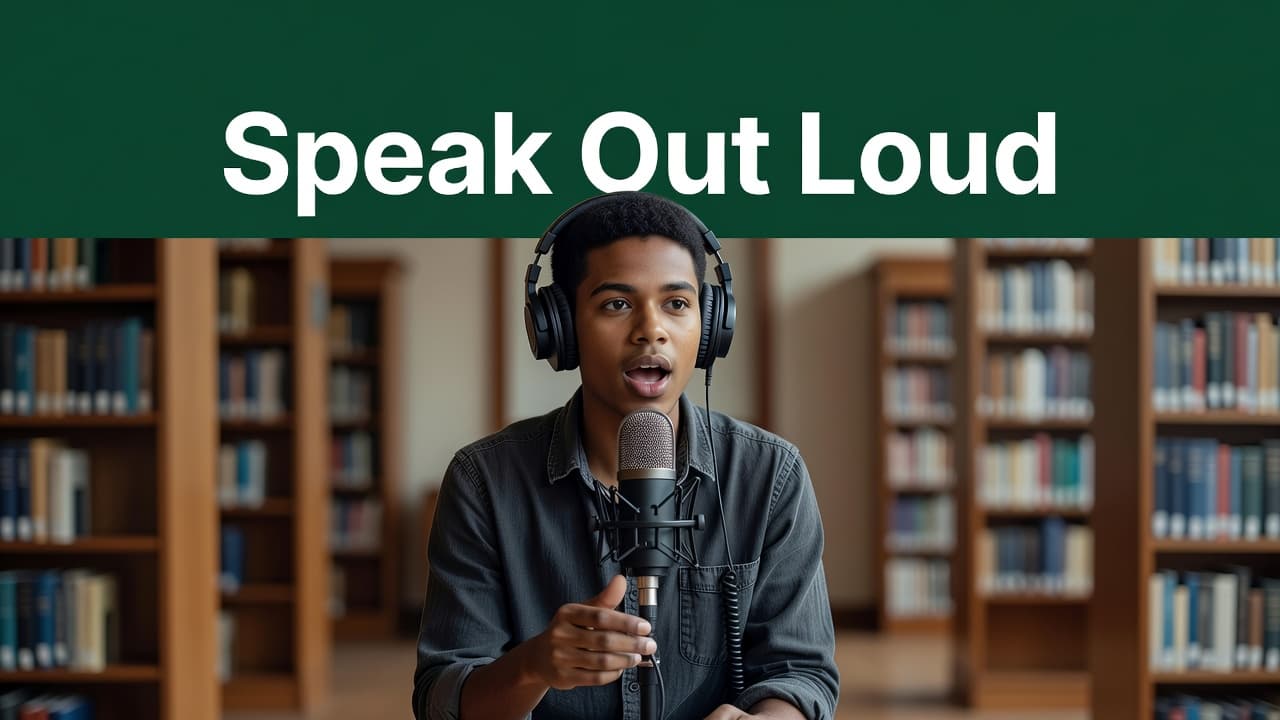
If you repeat short audio, answer simple questions out loud, or get corrected by a tutor or language partner, your recall gets faster. So does your confidence. Passive study has its place, but active use is what turns knowledge into speech.
Motivation and a clear goal keep you moving
People learn French faster when they know why they are learning it. A trip to Paris, a French-speaking partner, work, family, an exam, or the simple wish to stop feeling stuck, any of these can be enough.
That reason matters when the early novelty wears off. Because it will. There is always a stage where your French feels clumsy and incomplete. A clear goal gets you through that stage. Motivation does not replace practice, but it does keep practice alive.
The fastest way to learn French without wasting time
If you want the short version, here it is: use French early, study often, and focus on language you will meet in real life. You do not need thousands of words to start. You need the right words, repeated enough times that they come out without a fight.
The fastest route is usually not the most intense one. It is the one you can keep doing next week as well.
Focus on the words and phrases you will use first
Start with high-frequency, everyday French. Greetings, numbers, time, food, travel, directions, shopping, basic questions, and common verbs will take you further than rare nouns ever will.
Phrases matter as much as single words. “I’d like”, “Where is”, “How much is”, “Can you repeat that?” and “What time does it start?” give you immediate range. You can swap in new nouns later and keep the same sentence frame.
Mix grammar with real practice from the start
Grammar matters. You do need articles, verb forms, question patterns, negatives, and sentence order. But grammar on its own is dry and easy to forget. The fix is simple: use every new rule in real sentences on the same day.
If you learn the present tense of aller, say where you are going. If you learn negation, say what you are not doing. If you learn question forms, ask them aloud. That makes grammar stick because it is attached to meaning, not only to a page of notes.
Reading, writing, listening, and speaking should work together. Even at beginner level, that mix is far stronger than treating grammar as a separate school subject.
Use short lessons, repetition, and regular review
Most beginners do better with short, focused lessons than with long sessions that leave them overloaded. Fifteen or twenty minutes of full attention beats an hour of drifting.
Review matters just as much as new material. Go back to yesterday’s phrases. Reuse last week’s verbs. Hear the same pattern in a new sentence. That repetition is not boring filler. It is how the language settles in.
Short audio, topic-based vocabulary, and simple exercises work well because they give you manageable chunks. You keep meeting the same structures in slightly different forms, and that is where confidence comes from.
A quick lesson in the morning and a five-minute review later on can do more than a heavy weekend session. Small steps sound modest. They are not. They are how people keep going long enough to get good.
The pace that sticks
You can learn useful French faster than most people think. A few months can get you through simple conversations and everyday situations. Stronger, more natural French takes longer, usually many months of steady contact with the language.
The quickest way to learn French is rarely the flashiest. It is the method you can repeat, out loud, every day or close to it.
Keep it practical. Keep it regular. Small daily effort adds up, and after a while, what felt hard starts to feel normal.
Check out my Beginners French Course HERE